



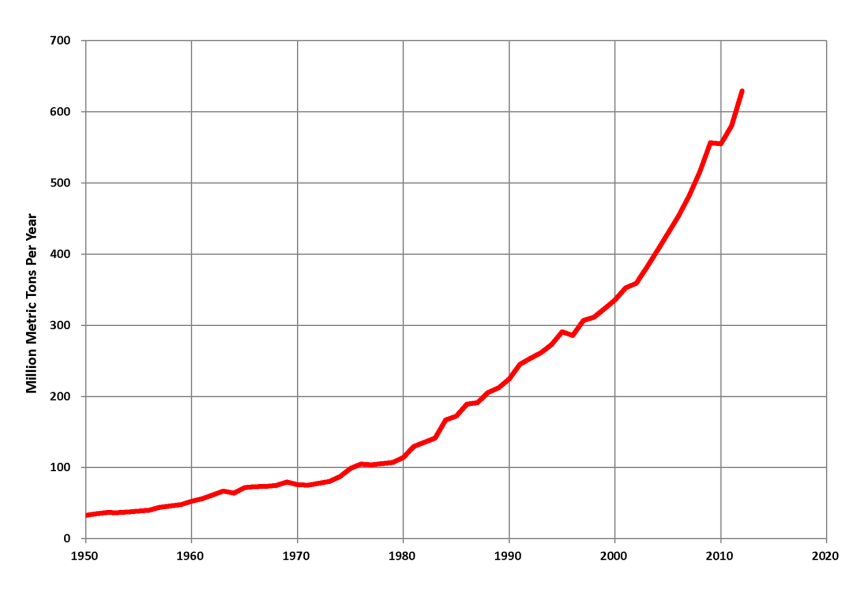
New Delhi – India expects record coal production of about 1,095 million tonnes in 2026 while adding renewable capacity faster than at any point in its history. Both are true, and the tension between them is the transition.
The country operates around 230 GW of coal-fired capacity. Government planning assumes coal use will not peak before 2040, and includes roughly 88 GW of new thermal capacity by 2032 alongside a doubling of production.
Displacement, not retirement
Coal power output has begun to decline, and high pithead inventories have tempered production momentum at Coal India, which accounts for roughly three quarters of national output.
What is happening is not closure. Thermal plants are running at lower capacity factors, serving as backup for a grid increasingly supplied by solar during daylight hours. The capacity stays. The utilisation falls.
That is a rational operating outcome and a difficult financial one. A plant built on assumptions of high utilisation does not recover its costs at low utilisation, and somebody carries that shortfall.
The just transition problem is fiscal before it is social
Coal in India is not only employment. It is state revenue, railway freight earnings and district economies built around a single employer. Jharkhand, Odisha, Chhattisgarh and West Bengal depend on coal royalties and cess in ways that no renewable project replaces, because a solar farm employs few people and pays its taxes elsewhere.
A credible transition therefore needs a centre-state fiscal arrangement, not merely reskilling programmes. That conversation has barely started.
What this means for corporate disclosure
Any Indian company computing Scope 2 emissions inherits the grid emission factor. As coal utilisation falls and renewable generation rises, that factor improves, and every company reports lower Scope 2 emissions without changing anything it does. Readers of BRSR filings should separate that effect from genuine efficiency gains.
Source: International Energy Agency coal production analysis for 2026, Coal India production reporting, and Ministry of Power capacity planning.