



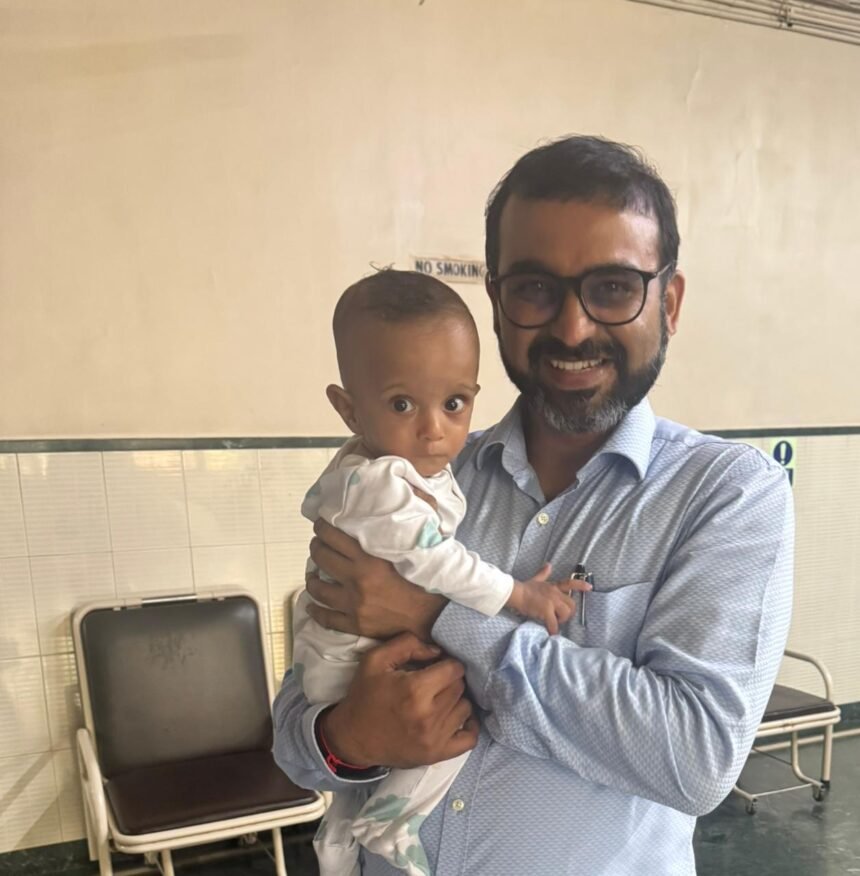
Premature Baby: A challenging high-risk twin pregnancy has highlighted the importance of timely medical decisions and specialised neonatal intensive care. Dr Nirmal Gujarathi at Surya Hospital in Santacruz, Mumbai, managed the case of a 35-year-old woman whose pregnancy had reached approximately six-and-a-half to seven months. However, the growth of both babies had stopped, and their blood supply was getting affected due to the mother’s severely high blood pressure. According to Dr. Nirmal Gujarathi, a senior gynaecologist involved in the case, the medical team had to take a difficult decision to deliver the babies prematurely to protect the life of the mother and give the babies a chance of survival. Premature Baby
High Blood Pressure Affected Babies’ Growth and Blood Supply
The woman was carrying twins, but the pregnancy had become increasingly complicated as her blood pressure rose significantly. The doctors observed that the babies were not growing as expected and that the blood supply reaching them was getting disrupted. The medical team monitored the patient closely for around eight to ten days. During this period, the doctors considered whether the pregnancy could be continued for some more time to allow the babies to develop further inside the womb. Premature Baby News
However, the deteriorating blood supply and the risk to the mother and babies made the situation critical. The doctors eventually decided that an early delivery was necessary. Dr. Gujarathi explained that the decision was taken after considering the safety of both the mother and the babies. The case required a tertiary care facility equipped with advanced intensive care facilities for the mother and specialised neonatal intensive care for extremely premature newborns. Premature Baby
Premature Baby: Babies Weighed Only 380-390 Grams at Birth
The Premature Baby were delivered at approximately 26-27 weeks of pregnancy. Their birth weights were extremely low, with one weighing around 390 grams and the other approximately 380 grams. Dr. Gujarathi pointed out that although the pregnancy had reached 26-27 weeks, the babies’ development, judged by their weight, was closer to that of babies at around five to five-and-a-half months of pregnancy. Considering their extremely low birth weights and premature condition, both newborns were immediately admitted to the Neonatal Intensive Care Unit (NICU) at Surya Hospital, Santacruz.
NICU Team Saves One Baby After Intensive Care
The NICU team worked intensively to provide specialised care to both Premature Baby. Despite the efforts of the doctors and neonatal specialists, one baby could not be saved because of a serious heart-related condition. The other baby responded to the treatment and continued to receive intensive medical support. According to Dr. Gujarathi, the surviving baby’s weight has now increased from approximately 390 grams at birth to around 800 grams. The baby is still in the NICU, where the medical team is closely monitoring growth and providing continuous care. The progress of the surviving baby has brought encouragement to the doctors and the family. However, the baby continues to require specialised neonatal care.
Eight to Ten Days of Monitoring Before the Difficult Decision
Dr. Gujarathi described the case as a joint effort involving the gynaecology and NICU teams. The doctors monitored the mother for eight to ten days while assessing whether it would be possible to continue the pregnancy and give the babies more time to grow. The medical team faced a difficult balance: continuing the pregnancy could offer the babies more time to develop, but the worsening blood supply and the mother’s condition also posed serious risks. The doctors ultimately chose early delivery because protecting the mother’s life and giving the babies a chance of survival were the immediate priorities.
The case underlines the role of coordinated medical care in managing complicated twin pregnancies, particularly when severe maternal health complications affect fetal growth and blood supply. It also highlights the importance of facilities that can provide advanced maternal ICU and neonatal intensive care under one roof. While the loss of one baby was deeply unfortunate, the survival and continuing progress of the other newborn reflect the efforts of the gynaecology and NICU teams at Surya Hospital.