


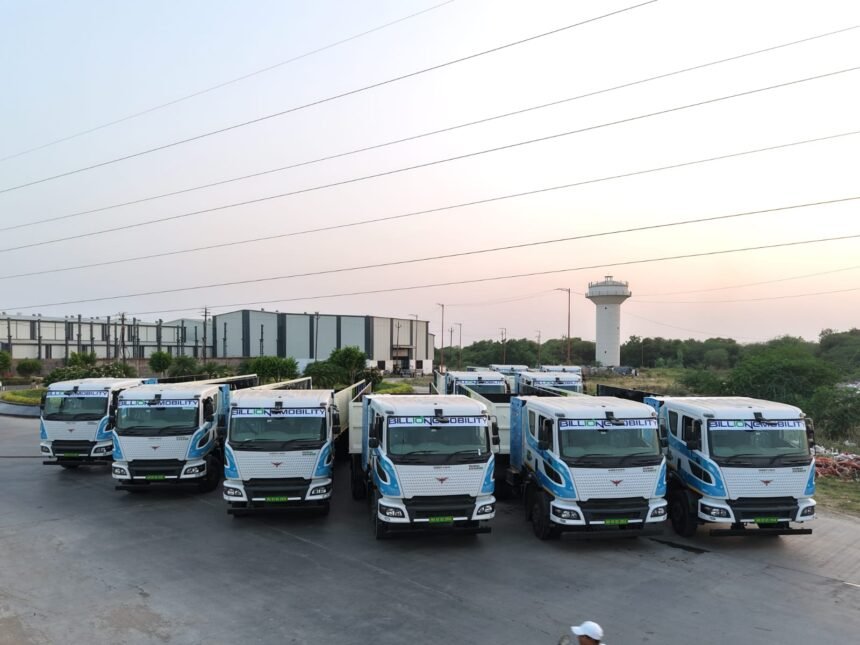
JK Lakshmi Cement has achieved nearly 100% electric vehicle (EV)-based clinker dispatches from its Sirohi plant in Rajasthan to its Kalol Grinding Unit in Gujarat, marking a significant step towards sustainable logistics in India’s cement industry. The company has already deployed more than 70 electric vehicles across key transportation routes and plans to expand its fleet to 120 EVs by March 2027.
The initiative forms part of JK Lakshmi Cement’s broader decarbonisation strategy, aimed at reducing emissions from transportation while improving operational efficiency across its supply chain. By shifting clinker transportation to electric mobility, the company is working to reduce the environmental footprint of its logistics operations.
JK Lakshmi Cement Expands EV Fleet Across Rajasthan and Gujarat
JK Lakshmi Cement has deployed over 70 electric vehicles across important logistics routes connecting its Sirohi plant with the Kalol Grinding Unit, Palanpur Unit and Surat Grinding Unit. The company is collaborating with specialised EV logistics providers SwitchLabs and Billion E to support the deployment and operations.
The expansion of electric vehicles across these routes represents an important development for the cement sector, where transporting raw materials and finished products over long distances is a major part of the supply chain. The transition to EV-based transportation is intended to support cleaner logistics while advancing the company’s sustainability goals.
Building on its existing fleet, JK Lakshmi Cement aims to increase the number of electric vehicles to 120 by March 2027. The planned expansion is expected to further strengthen the company’s efforts to integrate cleaner transportation solutions into its logistics network.
Vinita Singhania Highlights Sustainable Transportation
Commenting on the initiative, Vinita Singhania, Chairperson and Managing Director of JK Lakshmi Cement, said the company is focused on integrating sustainable practices across its operations while maintaining long-term business efficiency.
“At JK Lakshmi Cement, we are focused on integrating sustainable practices across our operations while ensuring long-term business efficiency. With a fleet of 70+ electric vehicles currently operating across our logistics network, we are making tangible progress in adopting cleaner transportation solutions. The transition to EV-based clinker dispatches on the Sirohi–Kalol route is an important milestone in this journey and reinforces our commitment to scaling sustainable logistics as part of our broader decarbonisation strategy,” she said.
The company’s EV deployment programme is an integral part of its green logistics roadmap. Through cleaner transportation and other sustainability-focused measures, JK Lakshmi Cement aims to improve operational performance and reduce emissions across its value chain.
JK Lakshmi Cement Targets Net-Zero Emissions by 2047
JK Lakshmi Cement has outlined a long-term ambition to achieve net-zero emissions by 2047. The expansion of its electric vehicle fleet is one of the initiatives supporting this objective, alongside its broader efforts to make manufacturing and logistics more sustainable. The company currently has a combined cement manufacturing capacity of approximately 18 million tonnes per annum and has set a vision of expanding its capacity to 30 million tonnes by 2030.
Part of the JK Organisation, JK Lakshmi Cement has an established presence across Northern, Western and Eastern India. Its operations include integrated cement plants in Rajasthan and Chhattisgarh, along with grinding units in Gujarat, Haryana and Odisha.
As the Indian cement industry continues to explore ways to reduce its environmental impact, JK Lakshmi Cement’s EV deployment programme highlights the growing role of electric mobility in industrial transportation. The planned expansion to 120 electric vehicles by March 2027 is expected to build on the progress already achieved on the Sirohi–Kalol route and strengthen the company’s green logistics strategy.
The growing use of electric vehicles in cement transportation also reflects the industry’s shift towards cleaner and more energy-efficient logistics. By expanding its EV fleet, JK Lakshmi Cement aims to strengthen sustainable supply chain practices, reduce dependence on conventional diesel-powered transportation and support India’s broader efforts to lower industrial emissions.