


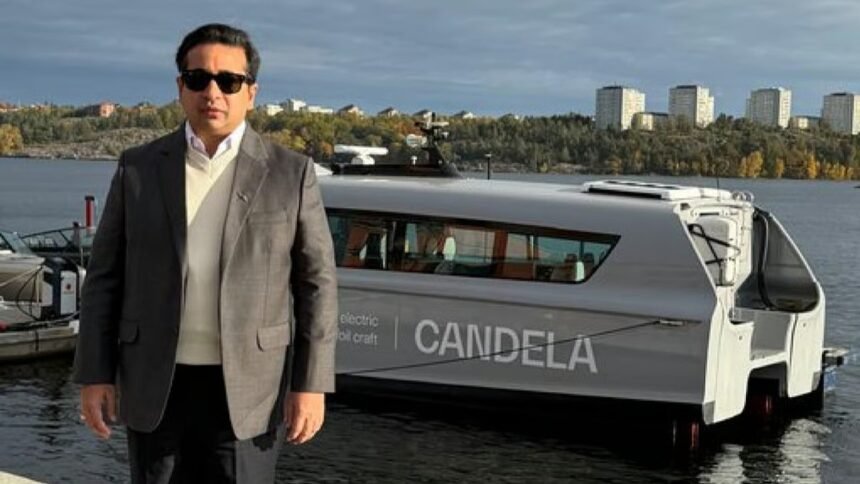
India’s First Electric Hydrofoil Vessel: Maharashtra has taken a significant step towards transforming India’s maritime transportation sector with the successful trials of the country’s first fully electric hydrofoil passenger vessel, the Candela P-12, imported from Sweden. The development marks an important milestone in India’s efforts to adopt cleaner, more energy-efficient and sustainable transportation technologies. The advanced electric vessel is currently undergoing trials in Maharashtra as part of a joint initiative involving the Government of Maharashtra, Rural Enhancers Group and Saadhav Shipyards Limited, with support from the Maharashtra Maritime Board (MMB).
India’s First 100% Electric Hydrofoil Vessel Undergoes Successful Trials in Maharashtra!
A major milestone in India’s sustainable maritime journey! India’s first fully electric Candela P-12 hydrofoil vessel, imported from Sweden, is undergoing successful trials in Maharashtra.
Under the visionary leadership of Hon’ble Chief Minister Shri Devendraji Fadnavis and Minister of Ports Shri Niteshji Rane, this joint initiative of the Government of Maharashtra, Rural Enhancers Group, and Saadhav Shipyards Limited showcases the Maharashtra Maritime Board’s commitment to bringing world-class maritime technologies to India, positioning Maharashtra at the forefront of sustainable water transportation.
@Dev_Fadnavis @CMOMaharashtra
— Nitesh Rane (@NiteshNRane) November 20, 2026
The project reflects Maharashtra’s growing focus on introducing modern maritime technologies and developing environmentally friendly alternatives to conventional water transport. With electric mobility gaining momentum across road and rail transportation, the introduction of an electric hydrofoil vessel could open new possibilities for passenger transportation through India’s waterways. India’s First Electric Hydrofoil Vessel News
Candela P-12: A New Generation of Electric Passenger Vessels
The Candela P-12 is an advanced electric passenger vessel developed by Swedish marine technology company Candela. Unlike conventional passenger boats, which travel through water with their hulls largely in contact with the surface, the Candela P-12 uses an advanced hydrofoil system to lift most of its hull above the water at cruising speeds. The vessel is equipped with computer-controlled underwater wings, known as hydrofoils. These wings generate lift as the vessel moves forward, allowing it to rise above the water and significantly reduce resistance.
This technology helps the vessel achieve greater energy efficiency while delivering a smoother and quieter passenger experience. Reduced water resistance also allows electric vessels to travel longer distances with comparatively lower energy consumption. The Candela P-12 has been designed to combine modern electric propulsion with advanced marine engineering. Its technology makes it particularly interesting for cities and regions looking to develop sustainable passenger transport through rivers, lakes, coastal routes and other waterways.
India’s First Electric Hydrofoil Vessel: Why Hydrofoil Technology Matters for Sustainable Transportation
One of the biggest challenges in introducing electric boats is managing battery consumption. Conventional boats often require substantial energy to move through water because of resistance generated by their hulls. Hydrofoil technology addresses this challenge by lifting the vessel above the water surface once it reaches the required speed. As a result, the amount of water resistance is reduced considerably.
This can offer several advantages:
Lower energy consumption: Reduced drag helps improve the efficiency of electric propulsion.
Zero direct emissions: Electric propulsion eliminates exhaust emissions from the vessel during operation.
Reduced noise pollution: Electric motors operate more quietly than conventional diesel engines.
Improved passenger comfort: Hydrofoil technology can provide a smoother ride in suitable operating conditions.
Sustainable water mobility: The technology offers an alternative to conventional fossil-fuel-powered passenger boats.
These features could make electric hydrofoil vessels an attractive option for future urban and coastal transportation networks.
Maharashtra Government Pushes Green Maritime Innovation
The initiative is being undertaken under the leadership of Maharashtra Chief Minister Devendra Fadnavis and State Ports Minister Nitesh Rane. The Government of Maharashtra, Rural Enhancers Group and Saadhav Shipyards Limited are working together to bring this advanced Swedish maritime technology to India. The Maharashtra Maritime Board has played an important role in supporting the introduction of world-class maritime technologies in the state. The successful progress of the vessel’s trials highlights Maharashtra’s ambition to strengthen its position in modern water transportation and sustainable maritime infrastructure.
India’s First Electric Hydrofoil Vessel News
The initiative is also significant because it brings together government support, private-sector participation and international marine technology. Such collaborations can help introduce new transportation solutions while encouraging investment and innovation in India’s maritime sector. For Maharashtra, which has an extensive coastline and several important waterways, electric passenger vessels could become an important part of future transportation planning.
Could Electric Hydrofoil Vessels Transform Water Transport in Mumbai?
Mumbai’s geographical location makes it particularly suitable for exploring new water-based transportation options. The city is surrounded by the Arabian Sea and has several coastal and harbour areas where passenger ferry services already play an important role. The introduction of advanced electric vessels could support the development of cleaner passenger transportation in the Mumbai Metropolitan Region and other coastal locations in Maharashtra.
If successfully introduced into regular passenger operations, electric hydrofoil vessels could offer an alternative for selected routes where water transport is practical. They could also contribute to reducing dependence on conventional diesel-powered boats. However, their commercial deployment would depend on several factors, including route suitability, passenger capacity, operating costs, charging infrastructure, maintenance facilities and safety approvals. The ongoing trials will therefore be important in assessing the vessel’s performance under local operating conditions before any wider deployment decisions are made.
India’s First Electric Hydrofoil Vessel: A Step Towards India’s Green Maritime Future
India has been increasingly focusing on reducing carbon emissions and promoting sustainable transportation across different sectors. While electric vehicles are becoming more common on Indian roads, the maritime sector is also beginning to explore cleaner propulsion technologies. The Candela P-12 initiative represents an opportunity to introduce advanced electric marine mobility into the Indian market. It could also encourage greater awareness of hydrofoil technology and create opportunities for future collaboration between international technology developers and Indian maritime companies. India’s First Electric Hydrofoil Vessel News.
The involvement of Saadhav Shipyards Limited is particularly relevant in the context of India’s growing shipbuilding and maritime engineering ambitions. Partnerships involving domestic companies can help strengthen the country’s capabilities in adopting, maintaining and potentially supporting advanced vessel technologies. Although the successful trials represent an encouraging development, the next important step will be to evaluate the vessel’s operational performance and determine the possibilities for regular passenger services. India’s First Electric Hydrofoil Vessel
With its focus on innovation, energy efficiency and cleaner transportation, Maharashtra’s electric hydrofoil initiative could become an important example of how India’s waterways can contribute to a more sustainable mobility future.