


Maharashtra Drought Relief: The Maharashtra government has announced a series of measures to provide relief to farmers and rural communities affected by drought, with a focus on fodder availability, drinking water supply, agricultural infrastructure and financial assistance. Revenue Minister Chandrashekhar Bawankule, who chairs the Cabinet Sub-Committee on Drought Relief Measures, has directed officials to strengthen arrangements for livestock fodder and ensure that available water resources are used effectively.
Strengthening Farmer Welfare and Rural Development Across Maharashtra
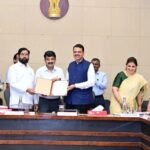
Chaired a meeting to discuss various demands of the All India Kisan Sabha at Sahyadri Guest House in Mumbai today.
Reviewed drought relief measures for farmers, including loan waivers for lift-irrigation schemes, ₹5000 advance assistance, timely scheme benefits, and drinking water and fodder supply.
Directed departments to address crop insurance and crop loan issues, expedite pending Ladki Bahin Yojana installments, consider welfare measures for rural workers, and investigate agricultural electricity and solar pump complaints.
Instructed all concerned departments to take timely action, reaffirming the Maharashtra Government’s commitment to farmer welfare and rural livelihoods.
DCM Eknath Shinde ji, DCM Sunetratai Pawar, Minister Radhakrishna Vikhe Patil ji, Minister Chandrashekhar Bawankule, Minister Girishbhau Mahajan, Minister Dattatray Bharane, senior officials and other dignitaries were present.
@mieknathshinde @SunetraA_Pawar @RVikhePatil @cbawankule @girishdmahajan @bharanemamaNCP
#Maharashtra #Mumbai
— Devendra Fadnavis (@Dev_Fadnavis) October 27, 2026
The decisions were taken at a meeting of the Cabinet sub-committee reviewing drought mitigation measures across the state. Key initiatives include fixed rates for dry and green fodder, funding to restart drinking water schemes that remain shut due to electricity-related issues, assistance eligibility rules for farmers and an assessment of additional areas seeking drought-hit status.
Maharashtra Fixes Fodder Prices for Drought-Affected Areas
To ensure adequate fodder for livestock in drought-hit regions, the government has established a five-member committee under the chairmanship of the District Collector. The committee will coordinate fodder procurement, cultivation, transportation and supplies from other districts based on local requirements.
The government has fixed the rate for dry fodder at ₹12 per kilogram and green fodder at ₹8 per kilogram. District Collectors have also been instructed to make the necessary financial arrangements for transportation so that fodder can reach areas facing shortages. Government land available with the Forest, Revenue, Water Resources, and Soil and Water Conservation departments can be used for fodder cultivation. Funding for these activities will be provided through District Planning Committees.
The government also plans to transport surplus fodder from Sindhudurg and Ratnagiri districts to drought-affected areas elsewhere in Maharashtra. These measures are intended to improve livestock protection and address shortages during the ongoing drought conditions.
Maharashtra Drought Relief: Closed Drinking Water Schemes to Receive Funding
The state government has decided to facilitate the reopening of drinking water supply schemes that remain non-operational because of disconnected electricity connections or unpaid power bills, even where water is available.
Funding will be made available through District Planning Committees to restore electricity connections and restart these schemes. The move is particularly important for locations where residents currently depend on water tankers despite the availability of local water sources. Temporary electricity connections will also be provided, where required, at locations selected for fodder cultivation. The government expects these steps to improve the utilisation of available water resources and reduce dependence on tanker-based water supply.
₹5,000 Advance Assistance: Eligibility Criteria Announced
The Cabinet sub-committee has finalised eligibility criteria for the ₹5,000 advance assistance announced for farmers. According to the decisions communicated after the meeting, farmers who pay income tax, government officers and employees receiving salaries from the government, and public representatives will not be eligible for this assistance. Farmers should check the applicable government resolution for the complete eligibility conditions and application procedure before relying on the assistance.
Maharashtra to Review Additional Drought-Hit Areas
The state has already declared 304 talukas drought-affected. However, demands have been received to include additional areas in districts such as Pune, Palghar, Raigad and Kolhapur. According to Bawankule, the concerned District Collectors have submitted preliminary reports. A decision on adding more talukas will be taken after physical inspections and the submission of final assessment reports.
Relief and Rehabilitation Minister Makarand Jadhav-Patil also stressed the importance of examining rainfall patterns at the circle level within talukas. The government will consider the reports submitted by District Collectors before deciding whether additional areas qualify for drought relief.
Maharashtra Drought Relief: Royalty Exemption for Desilting of Ponds
The government has also announced measures to encourage water conservation and improve rural infrastructure. Material such as soil, silt and murum extracted during the deepening of ponds belonging to the Water Resources and Soil and Water Conservation departments will be exempt from royalty when used for road construction.
Private individuals undertaking the deepening of water conservation ponds and village ponds will also be eligible for assistance at prescribed rates. The initiative aims to encourage desilting, improve water storage capacity and promote the productive use of excavated material. These activities can also support agricultural land levelling and improve soil conditions where the material is suitable for such use.
Maharashtra Drought Relief: Rural Roads, Fisheries and Social Welfare Included
The government has decided to address funding gaps affecting the construction of agricultural access roads and rural pathways, locally known as shet raste and panand raste. If the prescribed 60:40 ratio between skilled and unskilled labour creates a funding shortfall, the deficit will be covered through District Planning Committee funds.
Additional funding will also be made available to support the supply of fish seed and increase fish production. The drought relief measures will extend to eligible farmers in tribal areas and beneficiaries covered under the Social Justice Department, according to the decisions announced after the meeting.
The meeting was attended by ministers and senior officials from departments including disaster management, agriculture, animal husbandry, water supply, cooperation, fisheries, rural development and soil and water conservation.
With these measures, the Maharashtra government aims to address immediate drought-related challenges, protect livestock, improve drinking water availability and strengthen rural infrastructure. The inclusion of additional drought-affected talukas will depend on field inspections and the final reports submitted by the concerned authorities.