



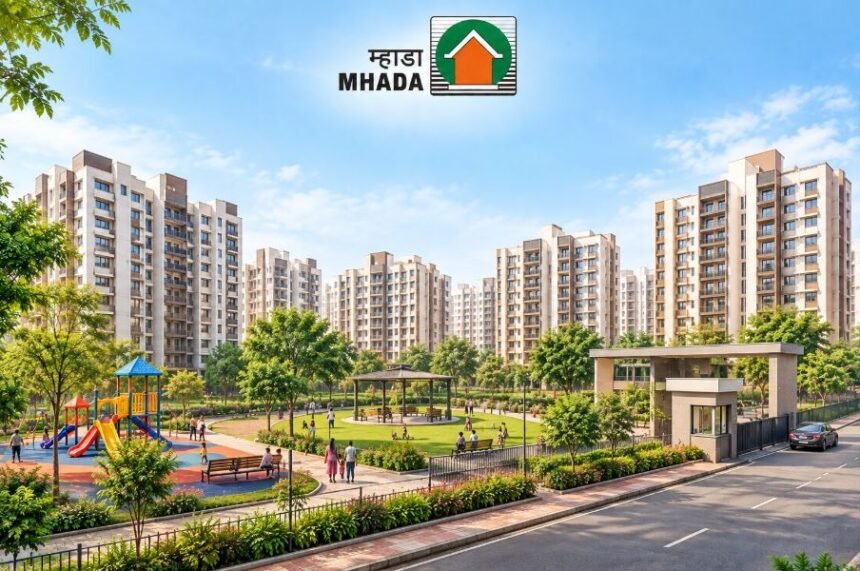
MHADA Cluster Redevelopment Scheme: The Maharashtra Housing and Area Development Authority (MHADA) is preparing for a major expansion of its urban redevelopment activities, with an estimated ₹25,000 crore in premium revenue and the potential to create nearly 20,000 new homes through its Cluster Redevelopment Scheme. The initiative reflects MHADA’s changing role from a traditional housing authority into a major developer of large-scale urban housing projects.
View this post on Instagram
According to Sanjeev Jaiswal, IAS, MHADA is focusing on transforming challenging redevelopment projects across Maharashtra while also exploring opportunities outside the state. The approach aims to unlock the development potential of old and densely populated urban areas, generate revenue and create additional housing opportunities. The development could mark an important shift in Maharashtra’s housing sector, where cluster redevelopment is increasingly being considered a solution for transforming ageing buildings and congested residential areas.
MHADA Cluster Redevelopment Scheme: A ₹25,000 Crore Opportunity
Cluster redevelopment involves bringing multiple old buildings or housing societies within a defined area together for redevelopment under a coordinated plan. Instead of redeveloping individual buildings separately, the entire cluster is planned as a single development project. This approach allows developers and planning authorities to use land more efficiently, improve infrastructure and create better residential facilities.
Under MHADA’s proposed development strategy, the Cluster Redevelopment Scheme has the potential to generate approximately ₹25,000 crore in premiums. It could also create nearly 20,000 additional homes. Premium revenue is an important source of income for housing and development authorities. Such revenue can support housing-related initiatives, redevelopment activities and infrastructure development, subject to applicable government policies and project conditions.
The estimated figures indicate the financial and housing potential of MHADA’s cluster redevelopment plans. However, the actual revenue and number of homes will depend on project approvals, implementation and redevelopment progress.
From Housing Authority to Large-Scale Urban Developer
MHADA has traditionally played an important role in providing affordable housing to different income groups in Maharashtra. Over the years, the authority has also taken up redevelopment projects involving old residential buildings, housing colonies and urban properties. Its latest strategy suggests a broader role in urban development. Rather than limiting its activities to individual housing projects, MHADA is increasingly focusing on large-scale redevelopment opportunities that can transform entire neighbourhoods.
Cluster redevelopment can help address several long-standing urban challenges, including ageing buildings, inadequate infrastructure, limited open spaces and overcrowded residential areas. By coordinating redevelopment across larger land parcels, MHADA can potentially support planned urban growth while creating additional housing stock.
MHADA Explores Opportunities Beyond Maharashtra
Another important aspect of this strategy is MHADA’s interest in exploring redevelopment opportunities outside Maharashtra. The authority is looking to build on its experience of handling complex urban redevelopment projects within the state and examine possibilities at the national level. If this expansion takes shape, MHADA could emerge as a wider player in India’s urban housing and redevelopment sector. However, projects outside Maharashtra would require suitable government approvals, institutional arrangements and partnerships with relevant authorities. The move also reflects the growing importance of public-sector housing agencies in addressing India’s urban housing requirements.
How Cluster Redevelopment Can Transform Cities
Many Indian cities have large residential areas consisting of ageing buildings constructed several decades ago. These buildings often face problems such as structural deterioration, limited parking, poor drainage, inadequate public spaces and outdated infrastructure. Redeveloping these buildings individually can be difficult because of land limitations, ownership arrangements and the need for coordination among multiple stakeholders. Cluster redevelopment offers a more comprehensive approach.
It can provide several benefits:
More housing: Additional residential units can be created through planned development.
Better infrastructure: Roads, drainage, water supply and other facilities can be upgraded.
Improved living conditions: Residents can receive modern housing with improved amenities.
Better land utilisation: Multiple properties can be developed through a coordinated plan.
Revenue generation: Premiums and other applicable development charges can generate funds for the authority.
For cities such as Mumbai, where land availability is limited and several residential areas require redevelopment, cluster-based planning can play an important role in future urban development.
A New Chapter for Maharashtra’s Housing Sector
MHADA’s estimated ₹25,000 crore premium potential and the possibility of creating nearly 20,000 homes highlight the scale of opportunity associated with its Cluster Redevelopment Scheme. The strategy could strengthen the authority’s financial position while expanding its contribution to urban housing development. The focus on opportunities beyond Maharashtra also indicates a possible expansion of MHADA’s role at the national level.
As urban centres continue to grow and demand for better housing increases, large-scale redevelopment projects are likely to become an important part of India’s urban planning strategy. For MHADA, the next challenge will be converting these estimated opportunities into approved and successfully completed projects. The progress of these initiatives will determine how effectively the authority can combine redevelopment, revenue generation and affordable housing in the coming years.