



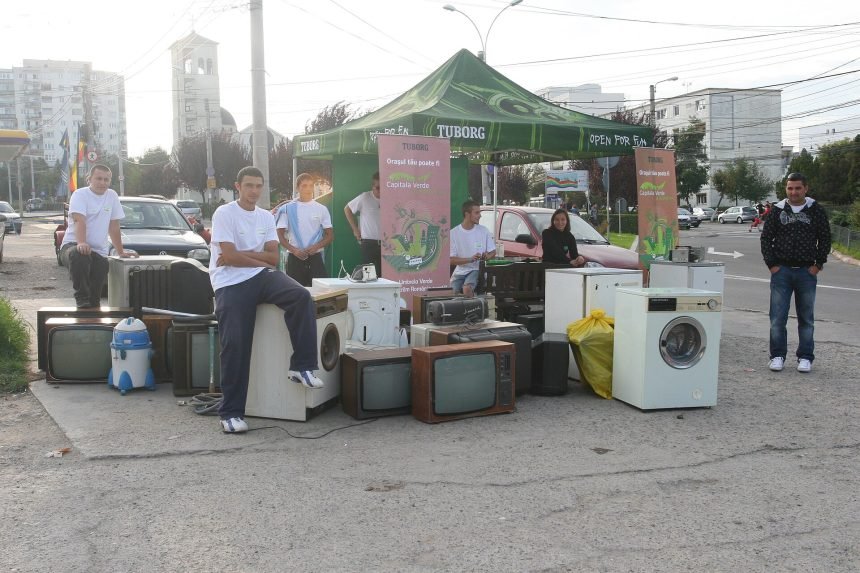
New Delhi – Producers of electronic goods must recycle 70 per cent of their estimated waste generation in financial years 2025-26 and 2026-27, up from 60 per cent, with the target rising again to 80 per cent from 2027-28.
The obligation sits under the E-Waste (Management) Rules, 2022 and runs entirely through the Central Pollution Control Board portal. Manufacturers, producers, refurbishers and recyclers across 106 categories of covered equipment must register. An unregistered entity cannot legally operate, and every return and certificate is a portal record.
How the obligation is discharged
Producers do not physically collect their own products. They buy EPR certificates generated by registered recyclers on the portal, in volumes matching their year-wise targets.
That design turns compliance into a procurement exercise, and it makes certificate price the central variable. Too cheap, and recyclers cannot fund formal processing, leaving material to the informal sector. Too expensive, and producers carry a cost they will resist.
The price band, and the litigation over it
An amendment in March 2024 placed certificate prices inside a band: no more than 100 per cent of the applicable environmental compensation, and no less than 30 per cent of it. The rupee value moves with whatever compensation rate CPCB sets, rather than any figure fixed in the rules themselves.
Producers argue the floor imposes an artificial cost. Recyclers argue that without it, prices collapse to a level that cannot sustain compliant processing. The band has been challenged before the Delhi High Court and, absent a final judgment, remains the operative planning basis.
Why this reaches the balance sheet
A company selling covered equipment carries a recycling liability that scales with sales and tightens annually. For listed producers, waste figures also feed the circularity attribute of BRSR Core, which now carries external assessment or assurance.
A shortfall against target is therefore no longer only a regulatory matter. It is a number an assurance provider will look at.
Source: E-Waste (Management) Rules, 2022 and subsequent amendments, and Central Pollution Control Board EPR portal guidance.