



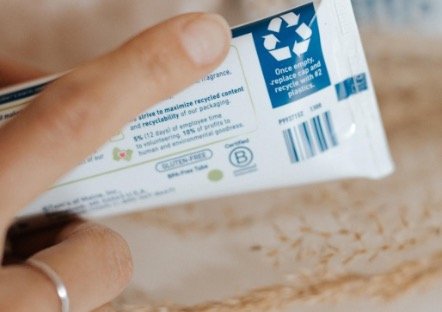
Colgate is taking major steps towards making everyday consumer products more sustainable through packaging innovation and recycling initiatives. Addressing one of the biggest challenges in packaging sustainability, the company has transitioned 100% of its toothpaste portfolio by volume to recyclable tubes, introducing more than 2 billion recyclable tubes. Additionally, 95% of Colgate‘s product packaging is now recyclable, marking a significant step towards reducing packaging waste and promoting a circular economy.
Colgate’s Recyclable Toothpaste Tubes Mark Major Sustainability Milestone
Making everyday packaging recyclable at scale has remained a major challenge for the FMCG industry. Colgate’s transition to recyclable toothpaste tubes represents an important development in addressing this issue. By focusing on innovative packaging solutions, the company aims to reduce the environmental impact of products that are used by millions of consumers every day. The initiative also highlights how product manufacturers can rethink packaging design and make sustainability an integral part of their business operations rather than treating it as a separate environmental activity.
Let’s CircleUp Initiative Converts Used Toothpaste Tubes into Construction Materials
Going beyond recyclable packaging, Colgate is also exploring innovative ways to reuse discarded materials. Through its Let’s CircleUp initiative, the company has transformed 221.8 kg of used toothpaste tubes, along with other low-value plastics and discarded foundry dust, into Silica Plastic Blocks.
These blocks have been installed across an area of 780 sq. ft. at Colgate’s India Global Technology Centre in Mumbai. The project demonstrates how difficult-to-recycle materials can be converted into useful construction products through innovation and resource recovery.
Project Saves Cement, Sand and Aggregate, Prevents CO₂ Emissions
The initiative has delivered measurable environmental benefits by reducing the use of conventional construction materials. The project helped save 1.54 tonnes of cement, 3.08 tonnes of sand and 4.62 tonnes of aggregate. Additionally, it prevented nearly 5 tonnes of carbon dioxide equivalent (CO₂e) emissions. These outcomes demonstrate the potential of using recycled materials in construction and reducing dependence on conventional resources.
Why Packaging Circularity Is Important for the FMCG Industry
Packaging waste remains a major environmental challenge, particularly in the fast-moving consumer goods (FMCG) sector, where products are consumed daily and their packaging often becomes waste immediately after use.
Making packaging recyclable is only the first step. Effective recycling also depends on consumer awareness, proper waste segregation, collection infrastructure and collaboration between manufacturers, recyclers and government agencies. Colgate’s initiatives highlight the importance of addressing the entire lifecycle of packaging, from product design and manufacturing to collection, recycling and reuse.
Consumer Awareness and Industry Collaboration Can Strengthen Recycling
Building a successful recycling ecosystem requires participation from consumers as well as businesses. Consumers need access to convenient recycling systems, while companies must continue investing in sustainable materials, packaging innovation and waste recovery solutions.
Colgate’s Let’s CircleUp initiative offers an example of how discarded materials can be converted into useful resources instead of ending up as waste. Such projects can encourage other FMCG companies to explore innovative approaches to packaging circularity. As businesses increasingly integrate sustainability into their operations, initiatives like these underline the importance of combining technology, responsible packaging and industry collaboration to build a more resource-efficient and circular economy.