


Dharavi Redevelopment: The controversy surrounding the Dharavi redevelopment project intensified on Saturday as Congress MP and Mumbai Congress President Varsha Gaikwad launched a sharp attack on the Maharashtra government and the Adani Group, alleging that the project is being designed to benefit a corporate entity while putting the homes, livelihoods and future of Dharavi residents at risk.
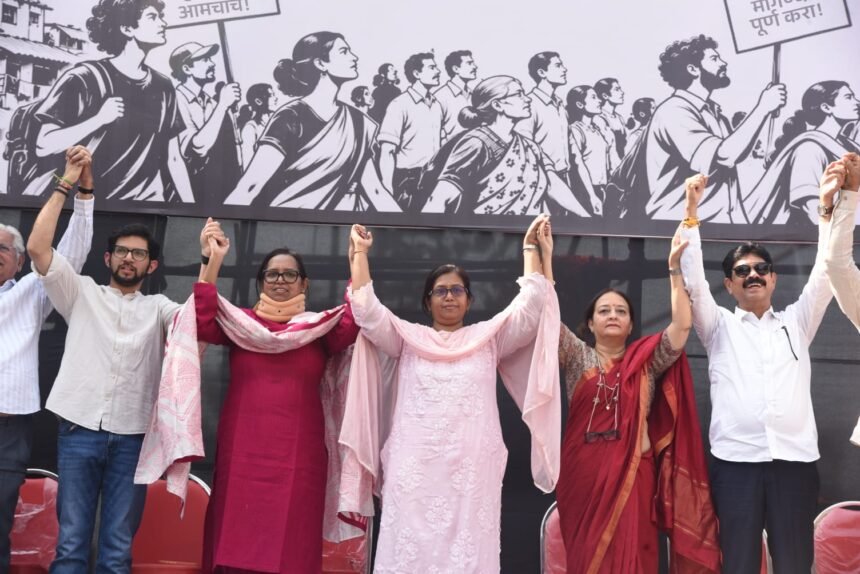
Addressing an all-party protest march at the Dharavi Experience Centre, Gaikwad alleged that the Mahayuti government was using the name of Dharavi’s development to facilitate the transfer of thousands of acres of land in Mumbai to the Adani Group. She claimed that the government’s real intention was to transform Dharavi into another Bandra-Kurla Complex (BKC) by displacing its existing residents and businesses.
The protest brought together leaders and representatives from the Congress, Shiv Sena (UBT), Maharashtra Navnirman Sena (MNS), Aam Aadmi Party and other political groups. Thousands of people reportedly participated, demanding that Dharavi residents receive proper rehabilitation within the locality and that their existing homes and commercial establishments be protected.
धारावी का पुनर्विकास धारावी में ही होगा! धारावीकरों के अधिकारों से कोई समझौता नहीं होगा! ✊
न धारावी में गुंडागर्दी चलेगी, न दादागिरी! यह देश संविधान और कानून से चलता है, किसी की मनमानी से नहीं।
लोकसभा में नेता प्रतिपक्ष आदरणीय श्री @RahulGandhi जी धारावीवासियों के अधिकारों, न्याय और सम्मान की लड़ाई में उनके साथ मजबूती से खड़े हैं। उनका स्पष्ट संदेश है कि लोकतंत्र और संविधान की रक्षा के लिए सभी को एकजुट होकर संघर्ष करना होगा। श्री राहुल गांधी जी का कहना है के धारावी के लोगों की आवाज़ को अनसुना नहीं किया जा सकता। उनके हक़ और अधिकारों की लड़ाई में हम पूरी मजबूती से साथ खड़े हैं।
हर पात्र धारावीवासी को उसका हक़ का घर और उचित पुनर्वास धारावी में ही मिलना चाहिए। देवनार, मुलुंड, कुर्ला या किसी अन्य स्थान पर पुनर्वास स्वीकार नहीं होगा।
@INCIndia कांग्रेस पार्टी का धारावी के साथ वर्षों पुराना रिश्ता है। हम धारावीकरों के न्याय, अधिकार और सम्मान के लिए पहले भी लड़ते आए हैं और आगे भी पूरी मजबूती से लड़ते रहेंगे।
धारावी किसी की मनमानी की जागीर नहीं, धारावीकरों के अधिकारों की भूमि है!
धारावीकरों की एकजुटता, संविधान की ताकत और न्याय की लड़ाई जारी रहेगी! ✊
#RahulGandhiJi #RahulGandhi
#Dharavi #Congress #MumbaiCongress #JusticeForDharavi #DharaviRedevelopment
— Prof. Varsha Eknath Gaikwad (@VarshaEGaikwad) November 28, 2026
‘Dharavi’s development cannot happen at Adani’s will’
Speaking at the protest, Gaikwad said Dharavi’s redevelopment must prioritise the interests of the people who have lived and worked there for generations. She argued that residents should not be forced to leave their neighbourhood in the name of development. “Give us a house in exchange for a house and a shop in exchange for a shop. Dharavi residents must be rehabilitated within Dharavi itself. They will not accept relocation to Deonar, Mulund or other locations,” was the central demand raised by the Congress leader.
Gaikwad said the Congress had consistently raised issues concerning Dharavi residents and would continue the struggle under the leadership of Rahul Gandhi to protect their rights. She warned that the party would oppose any redevelopment plan that ignored the wishes and interests of the local population. According to her, Dharavi’s future should be decided by its residents and not by a private developer. She also alleged that the government was attempting to create a second BKC by pushing out the existing population and changing the character of the neighbourhood.
Opposition questions Adani Group’s role in the redevelopment project
One of the major issues raised during the protest was the ownership structure of Adani Navbharat Developers Private Limited (ANDPL), the company established for the Dharavi redevelopment project. According to the figures cited by Gaikwad, the Adani Group holds an 80 per cent stake in the company, while the Maharashtra government has a 20 per cent stake. She questioned whether such an arrangement adequately protected the interests of Dharavi’s residents and alleged that government machinery was being used to facilitate the developer’s interests.
The Congress MP accused the state government of giving excessive importance to the interests of the Adani Group while overlooking the concerns of residents, small traders and local industries. She alleged that administrative agencies were being deployed to support the redevelopment process without adequately informing elected representatives and the public. These allegations formed a major part of the opposition’s criticism of the project. The protest also brought renewed attention to questions surrounding transparency, rehabilitation eligibility, land use and the future of Dharavi’s existing economic ecosystem.
Dharavi Redevelopment: Small businesses and traditional industries face uncertainty
Gaikwad described Dharavi as a “Mini India”, pointing to its diverse population, small-scale industries, manufacturing units and commercial activities. The locality is home to numerous businesses that provide employment and support livelihoods for thousands of families. She alleged that these businesses were facing increasing pressure and uncertainty because of the redevelopment process. According to her, residents continue to struggle with inadequate basic facilities such as water supply, roads and public toilets, while their concerns about redevelopment remain unresolved.
Dharavi Redevelopment Row
The opposition argued that Dharavi’s development should not be limited to large infrastructure projects or commercial construction. It must also improve living conditions, strengthen civic amenities and protect the livelihoods of people who depend on the area’s existing economic network. The demand for rehabilitation of commercial establishments was particularly significant. Local traders and business owners fear that relocation could disrupt established customer networks, supply chains and sources of income. The protesters therefore insisted that shops and businesses should receive appropriate replacement spaces rather than being separated from the community and markets they serve.
Dharavi Redevelopment: Allegations of pressure, threats and lack of transparency
Gaikwad further alleged that residents opposing aspects of the redevelopment project were facing pressure and intimidation. She claimed that people who organised protests in support of Dharavi residents were being subjected to police cases and that intermediaries had initially been used to influence residents before pressure tactics allegedly increased. She also questioned the lack of publicly accessible information about the redevelopment plan. According to her, even the Brihanmumbai Municipal Corporation (BMC) and elected representatives had not received adequate details about important aspects of the project.
The opposition demanded greater transparency and meaningful consultation with residents before decisions affecting their homes and livelihoods are implemented. These claims were made by opposition leaders during the protest and reflect their objections to the redevelopment process. The government and the project developer’s response to the specific allegations was not included in the press statement provided for this report.
Dharavi Redevelopment: Cross-party leaders unite over rehabilitation demands
The protest witnessed participation from several prominent political leaders, indicating that opposition to aspects of the Dharavi redevelopment project has become a wider political issue. Among those present were Mumbai Congress President and MP Varsha Gaikwad, Congress MLA Dr Jyoti Gaikwad, Shiv Sena (UBT) leader Aaditya Thackeray, former minister Subhash Desai, Anil Parab, MP Anil Desai, MLA Mahesh Sawant, MNS leader Bala Nandgaonkar, former Mumbai mayors Kishori Pednekar, Shraddha Jadhav and Vishakha Raut, Aam Aadmi Party representative Preeti Sharma, former MLA Baburao Mane and Prakash Reddy.
Leaders from different parties criticised the BJP-led Mahayuti government and expressed their determination to continue the fight for Dharavi residents’ rights. Their common demands included rehabilitation within Dharavi, protection of commercial establishments, transparency in project implementation and consultation with affected communities.
Dharavi redevelopment debate moves beyond housing
The latest protest highlights how the Dharavi redevelopment project has become more than an urban housing issue. It has raised wider questions about land ownership, public-private partnerships, the protection of informal businesses and the future of one of Mumbai’s most densely populated neighbourhoods. For residents, the central concern is whether redevelopment will improve their living conditions without separating them from their homes, workplaces and established communities. For political parties opposing the current approach, the key demand is that rehabilitation must be based on the rights and consent of the people affected.
Gaikwad’s warning that Dharavi’s development cannot take place according to the developer’s wishes reflects the growing political resistance to the project’s implementation. The opposition has made it clear that it intends to continue mobilising residents and political organisations around the issue. As the redevelopment debate intensifies, transparency, clear rehabilitation provisions and meaningful engagement with residents will remain central to determining whether the project can balance Mumbai’s urban development ambitions with the rights and livelihoods of Dharavi’s existing population.