



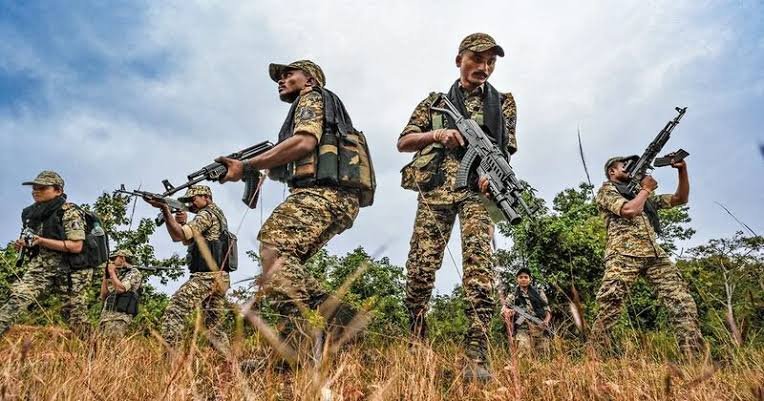
Naxal Free India: The end of a nearly six-decade-long chapter of violence and insecurity marks a major milestone in India’s internal security journey. An insurgency that began in a small village in West Bengal spread across several states, claimed thousands of lives, targeted security forces and kept many remote regions away from development. Now, the picture has changed significantly. According to the Government of India, as of March 31, 2026, no district remains officially classified as Naxal-affected. But how did India reach this stage, and what brought an end to one of the country’s longest-running internal security challenges? Naxal Free India News
Naxal Free India: From Naxalbari to a Nationwide Insurgency
The roots of Naxalism in India go back to 1967, when a peasant uprising began in Naxalbari village in West Bengal. The movement, which initially raised issues related to land rights and farmers, gradually evolved into an armed Maoist insurgency. In 1969, the Communist Party of India (Marxist-Leninist), or CPI (ML), was formed. Over the following years, Naxalite activities spread to several states, including Andhra Pradesh, Bihar, Odisha, Jharkhand, Chhattisgarh and Maharashtra. In 2004, the merger of the People’s War Group and the Maoist Communist Centre led to the formation of the Communist Party of India (Maoist), commonly known as CPI (Maoist). The organisation subsequently emerged as a major challenge to India’s internal security. Naxal Free India News
India’s Naxal-Affected Districts Drop from 126 to Zero
The transformation has been reflected in the steady decline in the number of districts affected by Left-Wing Extremism (LWE). According to the Ministry of Home Affairs, the number of Naxal-affected districts fell from 126 in 2018 to 90 in April 2018, 70 in July 2021 and 38 in April 2024. The figure further declined to just eight districts in December 2025 before reaching zero in March-April 2026. The government attributes this progress to the implementation of the National Policy and Action Plan, 2015, along with coordinated efforts by Central and State governments.
This is huge !
Congratulations India 🇮🇳
We are now officially Naxal – Free India !
From Guns to Governance, from Fear to Freedom, from Extremism to Empowerment !!
Only Modi Govt could make this possible!
Under the leadership of Hon PM Narendra Modi Ji and the guidance of Hon HM Amitbhai Shah, Left Wing Extremism is completely eradicated, with no district remaining affected.
Maharashtra’s Gadchiroli too is naxal-free and all set to become the next Steel Hub. Today, Gadchiroli stands as a symbol of peace, development and trust.
I salute our brave security forces, our police, and the people of Gadchiroli who chose the path of peace and progress.
Together, as citizens, let us pledge to never again let our Bharat Mata get affected by such divisive and violent ideologies.
@narendramodi @AmitShah
#India #Maharashtra #Mumbai #NaxalFreeIndia #ViksitBharat
— Devendra Fadnavis (@Dev_Fadnavis) November 25, 2026
Security Operations, Development and Rehabilitation Drive
The government’s strategy was not limited to security operations. It adopted a multi-pronged approach combining stronger security infrastructure, intelligence sharing, police modernisation, road connectivity, mobile networks, education, healthcare and welfare delivery. Special attention was also given to encouraging Naxalites to surrender and return to mainstream society through rehabilitation policies. Development initiatives aimed to improve access to essential services in remote and tribal areas that had faced prolonged disruption due to violence. Naxal Free India
37 Formerly Affected Districts to Remain Under Special Focus
Although India has achieved the status of an LWE-free country in terms of officially classified affected districts, the process of consolidating peace remains important. According to the Ministry of Home Affairs, 37 districts have been placed under the ‘Legacy and Thrust’ category. These districts are no longer classified as LWE-affected but will continue to receive security and development support to prevent any resurgence. One additional district has been placed under the ‘District of Concern’ category for continued monitoring.
Naxal Free India
The achievement marks a significant turning point in India’s internal security journey. The challenge ahead is to ensure that peace becomes permanent and that communities in formerly affected regions receive sustained access to education, healthcare, infrastructure, employment and economic opportunities. The journey that began in Naxalbari in 1967 has reached a historic milestone in 2026. From armed conflict to governance, and from insecurity to development, India’s next priority will be to ensure that the gains of peace reach every affected community.