


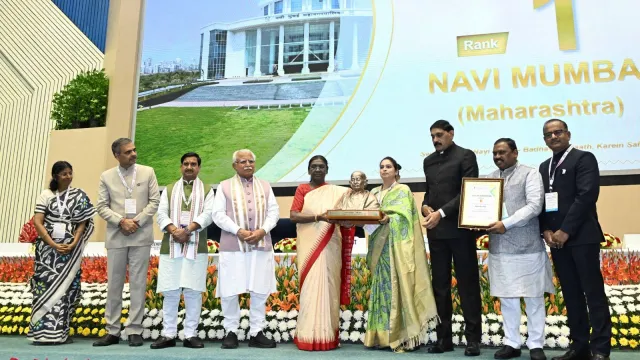
Navi Mumbai Cleanest City in India: Navi Mumbai has secured the No. 1 position in the Super Swachh League category of the Swachh Survekshan Awards 2025-26, bringing national recognition to Maharashtra. Surat in Gujarat finished second, while Vijayawada in Andhra Pradesh secured third place. The award was presented by President Droupadi Murmu at a ceremony held at Vigyan Bhawan in New Delhi on November 11, 2026.
Congratulations Maharashtra! Navi Mumbai Honoured as India’s Cleanest City at the Swachh Survekshan Awards 2025-26! 🏆
At the ‘Swachh Survekshan Awards 2025-26’, held today in New Delhi, Navi Mumbai was honoured as India’s Cleanest City. The awards were presented at the hands of Honourable President Smt. Droupadi Murmu Ji.
🏆 Navi Mumbai – 1st in the Country in the ‘Super Clean City’ Category under Swachh Survekshan 2025–26
🏆 Vita (Dist.Sangli) – 1st among Cities with a Population of 20,000–50,000
🏆 Panchgani (Dist. Satara) – 2nd among Cities with a Population Below 20,000.
🏆 Ratnagiri – 3rd in the Swachh Coastal Town category.
🏆 Pimpri-Chinchwad – Recognised as State First Swachh City of Maharashtra.
Heartiest congratulations to all five cities of Maharashtra, their dedicated Swachhata Warriors, officers, employees and the departments whose collective efforts have contributed to this achievement!
महाराष्ट्राचे अभिनंदन! स्वच्छ सर्वेक्षण पुरस्कार 2025-26 मध्ये नवी मुंबईला मिळाला देशातील सर्वात स्वच्छ शहराचा सन्मान!
भारताच्या महामहिम राष्ट्रपती मा. श्रीमती द्रौपदी मुर्मूजी यांच्या हस्ते, नवी दिल्ली येथे आयोजित ‘स्वच्छ सर्वेक्षण पुरस्कार 2025-26’ अंतर्गत महाराष्ट्रातील नवी मुंबई शहराला देशातील सर्वात स्वच्छ शहराचा सन्मान मिळाला.
🏆नवी मुंबई -स्वच्छ सर्वेक्षण 2025-26 अंतर्गत ‘सर्वोत्तम स्वच्छ शहर’ श्रेणीत देशात प्रथम स्थान
🏆विटा (जि. सांगली) – 20,000 ते 50,000 लोकसंख्या असलेल्या श्रेणीत प्रथम स्थान
🏆पाचगणी (जि. सातारा) – 20,000 पेक्षा कमी लोकसंख्या असलेल्या श्रेणीत द्वितीय स्थान
🏆रत्नागिरी शहर – स्वच्छ कोस्टल टाऊन श्रेणीत तृतीय स्थान
🏆पिंपरी चिंचवड – स्टेट फर्स्ट स्वच्छ सिटी ऑफ महाराष्ट्र
या यशात मोलाचे योगदान देणाऱ्या महाराष्ट्रातील 5 शहरांचे, तेथील स्वच्छता वॉरियर्सचे, अधिकारी-कर्मचारी तसेच संबंधित विभागांचे मनःपूर्वक अभिनंदन!
@rashtrapatibhvn @mlkhattar @tokhansahu_bjp
#Maharashtra #PresidentOfIndia #SwachhSurvekshan2026
— Devendra Fadnavis (@Dev_Fadnavis) November 11, 2026
Navi Mumbai Cleanest City in India: Navi Mumbai Tops the Super Swachh League
The Navi Mumbai Municipal Corporation (NMMC) has achieved a major milestone in India’s urban cleanliness movement by securing the first position in the Super Swachh League category. The recognition comes after the city secured third place in the previous year’s assessment, marking a significant improvement in its performance. NMMC Commissioner Kailas Shinde, Navi Mumbai Mayor Sujata Patil and Deputy Mayor Dashrath Bhagat received the award at the national ceremony.
The achievement reflects the collective efforts of municipal officials, sanitation workers, elected representatives and citizens. The Super Swachh League is a special category that recognises cities that have consistently performed among the country’s top three in previous cleanliness surveys.
Waste Management and Public Participation Behind the Achievement
Navi Mumbai’s performance has been supported by several cleanliness initiatives undertaken by the civic administration. These include regular road cleaning, door-to-door garbage collection, scientific waste management and strict implementation of solid waste management rules. The municipal corporation has also focused on improving the collection and transportation of waste, maintaining cleanliness at public places and monitoring sanitation activities through technology.
Citizen participation has played an important role in the city’s cleanliness efforts. Residents have been encouraged to segregate wet and dry waste and actively participate in cleanliness campaigns. The Swachhata App has also been used to receive citizen feedback and address complaints related to sanitation. According to NMMC Commissioner Kailas Shinde, the achievement is the result of years of consistent efforts by the civic administration and the active involvement of Navi Mumbai residents.
Surat and Vijayawada Secure Second and Third Positions
In the Super Swachh League category, Surat secured second place, while Vijayawada finished third. The results highlight the performance of urban local bodies in improving waste management, sanitation infrastructure and public cleanliness. In a separate category for cities with a population of more than 10 lakh, Greater Visakhapatnam Municipal Corporation secured the first position. Jabalpur ranked second, followed by Lucknow in third place. This distinction is important because the Super Swachh League and population-based categories have separate rankings.
Swachh Survekshan 2025-26: Assessment of More Than 4,700 Cities
The 10th edition of Swachh Survekshan assessed 4,751 urban local bodies across India. The assessment covered 43 indicators across 10 important areas, including waste segregation, garbage collection and transportation, solid waste processing, public sanitation, used water management, citizen feedback and the welfare of sanitation workers.
More than 3,000 trained assessors conducted on-ground evaluations using GPS-enabled monitoring and a digital verification system. Citizen participation was another important component of the assessment. The 2025-26 edition also expanded its coverage to include Himalayan cities, coastal towns and riverfront towns.
A Major Recognition for Navi Mumbai
Navi Mumbai’s achievement places the city among India’s leading urban cleanliness performers. It also highlights the importance of effective waste management, public participation and consistent civic administration in building cleaner and more sustainable cities. The recognition is not just an award for the municipal corporation but also acknowledges the contribution of sanitation workers and residents who participate in keeping the city clean. Going forward, maintaining the top position will require continued public cooperation, regular monitoring and improvements in waste segregation, recycling and sanitation infrastructure.